
In 2012, the Environmental Protection Agency adopted new emissions standards that were directed at cutting power plant emisions of mercury and other toxic air pollutants. On June 29, 2015, the U.S. Supreme Court rejected the rules with a vote of 5-4 citing the costs of the regulations to power plant operators. The EPA estimated the rules would force companies to spend $9.6 billion a year on compliance while saving Americans between $37 billion and $90 billion a year from premature death and reduced health complications. The decision reverses a D.C. Circuit Court of Appeals decision that called mercury emissions a “threat to the public and the environment.”
Read More
 In 1981 John R. Leeman and Karl Hildebrand founded Leeman Labs to produce analytical instrumentation based on the promise of Inductively Coupled Plasma-Atomic Emission Spectroscopy (ICP-AES) [also referred to as Inductively Coupled Plasma-Optical Emission Spectroscopy (ICP-OES)] to identify and quantify the concentration of elements within a sample.
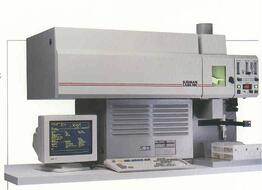 This initial success established Leeman Labs as both an innovator and an expert in ICP-OES and lead the company to endeavor into other realms of atomic spectroscopy adding the DC Arc technique and Mercury Analysis to its line of analytical instrumentation. In 2004 Leeman Labs was acquired by Teledyne technologies to augment Teledyne's existing laboratory and continuous monitoring instruments used in environmental applications, and complement Teledyne Tekmar's organic analysis instrumentation.