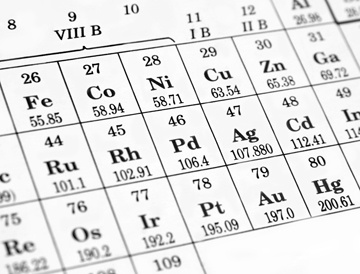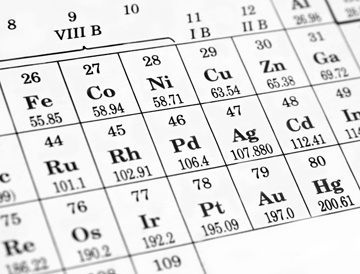
To the disdain of high school chemistry students everywhere, the International Union of Pure and Applied Chemistry recognized four new elements, which completed the seventh row on the periodic table. Earlier this year, the four elements formerly known as atomic numbers 113, 115, 117 and 118 were given names, nihonium (Nh), moscovium (Mc), tennessine (Ts) and oganesson (Og), respectively. The honor of naming the elements was given to the discoverers. A public review of the names expired on November 8, 2015.
Among the guidelines given to the discoverers for the elements’ names included the tradition of naming them after a mythological concept or character, a mineral or similar substance, a place or geographical region, a property of the element or a scientist. The names also had to end in "-ium," "-ine," or "-on" depending on the grouping of elements they belong.
Read More Quartz magazine recently listed its most underrated scientific breakthroughs of 2017. In addition to a pill that treats mental illness with built-in data tracking, floating wind farms, the oldest ice core ever drilled out of Antarctica and the emergence of lab made clothing, was an interesting tidbit about scientists watching two neutron stars collide for the first time. The discovery, by scientists from Laser Interferometer Gravitational-wave Observatory (LIGO), suggests that we are all made of elements created in stars.